Find PEM Electrolyzer Core for Lab Gas Supply, Therapy, New Energy
Source 18 PEM electrolyzer core units with varying hydrogen output rates and certifications. Buyers can compare specifications like MEA active area, design life, and pressure ratings for applications in new energy and medical fields.
Key considerations
Products List


Comprehensive Sourcing Guide
Strategic Sourcing Guide for PEM Electrolyzer Cores
Understanding Core Technical Specifications and Performance Metrics
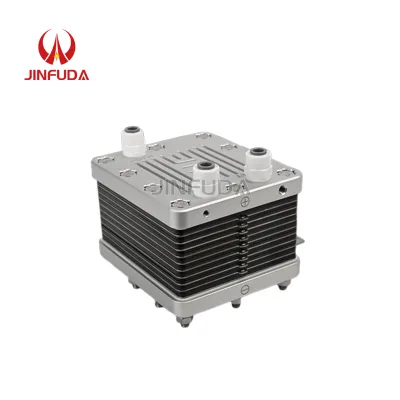
When sourcing a Proton Exchange Membrane (PEM) electrolyzer core, buyers must prioritize precise technical specifications that define operational efficiency and compatibility with downstream systems. The core unit is the heart of the electrolysis process, where water is split into hydrogen and oxygen using an electric current. Based on available market data, the performance of these cores varies significantly depending on the intended application scale, ranging from compact laboratory units to larger industrial modules.
A critical parameter to evaluate is the hydrogen and oxygen output rate. Market observations indicate specific models capable of producing 4800ml/min of hydrogen and 2400ml/min of oxygen, while other variants are rated for 2000ml/min and 1000ml/min respectively. These figures are not merely nominal; they dictate the sizing of the balance-of-plant components, including gas separators and storage tanks. Buyers should verify that the stated output rates align with their specific production requirements, as mismatched capacities can lead to system inefficiencies or bottlenecks.
The electrical characteristics of the core are equally vital. The constant current rating serves as a baseline for power supply integration. For instance, certain high-capacity cores operate at a constant current of 80A, whereas smaller units may function at 30A. The single cell voltage typically ranges between 1.75V and 2.5V, a factor that directly influences the total stack voltage and the required power input. Furthermore, the energy consumption metric, often expressed in kilowatt-hours per normal cubic meter (kWh/Nm³) of hydrogen, is a primary driver of operational costs. One observed specification lists a consumption of 4.2kWh/Nm³ H2, a figure that buyers must cross-reference with their local energy costs to calculate total cost of ownership.
Thermal management and pressure tolerance are additional technical constraints. The circulating water temperature is a critical operational window, with observed ranges spanning from 25°C to 45°C. Maintaining this temperature is essential for membrane integrity and reaction kinetics. The circulation mode, often involving a water pump with specific flow rates like 2400ml/min or 220ml/min depending on the model, must be compatible with the buyer's cooling infrastructure. Regarding pressure, the maximum withstand pressure is a safety-critical specification. Data points show values of 1MPa for larger cores and 0.8MPa for smaller variants. Buyers must ensure their system design does not exceed these limits to prevent catastrophic failure.
Compliance, Certification, and Regulatory Standards
In the B2B procurement of industrial equipment, verifying compliance with international standards is non-negotiable. The PEM electrolyzer core market is characterized by a mix of certifications that validate safety, environmental impact, and quality management. Buyers should explicitly check for the presence of RoHS (Restriction of Hazardous Substances), ISO, and CE certifications. These marks indicate that the product adheres to European safety directives and international quality management systems.
However, it is crucial to note that certification status can vary by model. While some product listings confirm the presence of RoHS, ISO, and CE marks, other specific models may only list ISO and CE. This discrepancy suggests that buyers cannot assume a blanket certification for an entire product line. Due diligence requires requesting the specific certificate of conformity for the exact model number being purchased. The absence of a specific certification in a general listing should not be interpreted as a lack of compliance, but rather as a need for explicit verification from the supplier.
Beyond product-level certifications, the manufacturing origin and standards play a role in regulatory acceptance. Products originating from manufacturing hubs such as Ningbo, Zhejiang, China, are common in the global supply chain. The standard designation for these cores often includes specific output capacities and physical dimensions, such as "4800ml/min PEM electrolyzer core" or "1600ml/min PEM electrolyzer core." These standards serve as a baseline for technical interchangeability. When evaluating a supplier, buyers should request documentation that confirms the product meets the relevant international standards for pressure vessels and electrical safety, particularly if the equipment will be deployed in regions with strict regulatory frameworks like the EU or North America.
Cost Drivers and Economic Factors in Procurement
The pricing of PEM electrolyzer cores is influenced by a complex interplay of technical specifications, production volumes, and customization requirements. The observed market price range is exceptionally broad, spanning from approximately $80 to nearly $180,000. This variance is not arbitrary but reflects the fundamental differences in scale, capacity, and complexity between the units.
The primary cost driver is the hydrogen output capacity. A core producing 4800ml/min will naturally command a higher price than a unit producing 2000ml/min due to the increased material usage, specifically the Membrane Electrode Assembly (MEA) and the precious metal catalysts involved. The catalyst system is a significant cost component; advanced cores utilize anode catalysts of Iridium Oxide (IrO2) and cathode catalysts of Platinum-Cobalt (PtCo) alloy. The market price of these precious metals fluctuates, directly impacting the unit cost of the electrolyzer core.
Customization is another major factor influencing the final price. While many suppliers offer standard configurations, the availability of customization allows buyers to tailor the core to specific application needs, such as unique dimensions or modified electrical interfaces. This flexibility often comes at a premium. Additionally, the Minimum Order Quantity (MOQ) affects the unit economics. The observed MOQ range spans from 1 to 50 units. Buyers purchasing a single unit for prototyping or R&D will face a higher per-unit cost compared to those placing bulk orders of 50 units, where economies of scale can significantly reduce the price.
Packaging and logistics also contribute to the total landed cost. The observed packaging methods include "Carton with Foam Padding" for international suitability and "Wooden Box Packing" for heavier industrial units. The weight of the unit, ranging from 115kg to 500kg for larger models like the BriLyzera series, impacts shipping costs and handling requirements. Buyers should factor in these logistics costs when comparing the "observed listed price" against the total cost of acquisition.
Typical Applications and Operational Use Cases
PEM electrolyzer cores are versatile components designed for a diverse array of applications, ranging from small-scale research to commercial energy systems. The selection of a core should be driven by the specific use case to ensure optimal performance and longevity.
One primary application field is New Energy, where these cores are integral to hydrogen production for fuel cells and renewable energy storage. In this context, the core's ability to handle variable power inputs is crucial. Specifications such as a power range of 5% to 150% indicate the flexibility of the core to operate efficiently under fluctuating load conditions, which is typical when paired with intermittent renewable energy sources like solar or wind.
Another significant application is in the Medical sector, particularly for commercial hydrogen therapy. The high purity of the hydrogen produced, observed at 99.99%, is a critical requirement for medical applications where impurities could pose health risks. The compact dimensions of smaller cores, such as the 93x93x79mm variant, make them suitable for integration into portable or clinical devices.
Laboratory gas supply is a third major use case. Researchers require precise control over gas generation rates and purity. The fast start-up times observed in some models, with warm start times of 10 seconds and cold start times of 8 minutes, are advantageous for laboratory environments where rapid testing cycles are common. The "Ultra Low" noise level is another feature beneficial for lab settings, ensuring a quiet working environment.
For industrial purposes, the core serves as a gas separation unit. The design life of the core is a key consideration here. While some models are rated for over 10,000 hours, others boast a design life of up to 80,000 hours. This vast difference in longevity suggests that the intended application duration and maintenance schedules must be carefully aligned with the selected core's specifications. Buyers should match the high-durability models with continuous industrial operations and the standard-life models with intermittent or pilot-scale projects.
Supplier Evaluation and Quality Assurance Protocols
Evaluating a supplier for PEM electrolyzer cores requires a rigorous approach that goes beyond price comparison. Buyers must assess the supplier's ability to deliver consistent quality and technical support. The first step is verifying the authenticity of the product attributes. For example, the MEA active area is a precise specification, with observed values like 106x78mm (8 cells) or 56x56mm (10 cells). Buyers should request test reports or datasheets that confirm these dimensions, as variations can affect the stack voltage and current density.
Quality control should focus on the manufacturing process and the condition of the parts. The product condition is listed as "New," which is a baseline expectation, but buyers should verify that the units are factory-sealed and free from shipping damage. The inclusion of specific parts, such as valves, should be confirmed in the packing list to ensure the core is ready for immediate integration.
The supplier's origin and logistics capabilities are also critical. With products originating from China, specifically Ningbo, Zhejiang, buyers should evaluate the supplier's experience with international shipping. The use of "Carton with Foam Padding" for international suitability indicates an awareness of global logistics, but for heavier units, "Wooden Box Packing" is often required to meet export standards. Buyers should inquire about the supplier's track record in handling customs documentation and ensuring that the packaging meets the destination country's import regulations.
Furthermore, the supplier's responsiveness to customization requests is a key differentiator. Since customization is available, the supplier must demonstrate the technical capability to modify the core or its interface without compromising the integrity of the MEA or the catalyst system. Buyers should ask for case studies or references from previous customization projects to gauge the supplier's flexibility and engineering expertise.
Long-Term Procurement and Lifecycle Management
Procuring a PEM electrolyzer core is not a one-time transaction but the beginning of a long-term relationship that impacts operational efficiency and total cost of ownership. The design life of the core is a primary metric for lifecycle planning. While some units are rated for 10,000 hours, others are designed for 80,000 hours. This disparity necessitates a clear understanding of the intended operational schedule. For continuous 24/7 operations, a core with a higher design life rating is essential to minimize downtime and replacement frequency.
Maintenance and replacement strategies should be developed based on the core's specifications. The circulation mode and temperature range (25-45°C) dictate the maintenance requirements for the cooling system. Buyers should ensure that their maintenance teams are trained to monitor water quality and temperature to prevent scaling or membrane degradation. The use of specific catalysts like IrO2 and PtCo alloy also implies that the core is sensitive to impurities in the feed water, necessitating high-purity water systems.
Future-proofing the procurement decision involves considering the scalability of the system. The availability of different models, such as the KB4800, KC2000, and the BriLyzera series, suggests that buyers can scale their hydrogen production capacity by adding more cores. However, compatibility between different models must be verified before attempting to expand the system. The dimensions and electrical characteristics of the cores must align to ensure seamless integration.
Finally, buyers should establish a clear warranty and support agreement with the supplier. Given the high value and technical complexity of PEM electrolyzer cores, a robust warranty covering defects in materials and workmanship is essential. The supplier should also provide access to technical support for troubleshooting and optimization, ensuring that the core operates at peak efficiency throughout its design life. By focusing on these long-term considerations, buyers can secure a reliable supply of hydrogen and oxygen while minimizing the risks associated with equipment failure and operational downtime.
FAQs
What are the hydrogen and oxygen output rates for the KB4800 core?
The KB4800 core produces 4800ml/min of hydrogen and 2400ml/min of oxygen. This capacity supports commercial therapy and lab gas supply applications requiring higher gas generation volumes.
Which certifications are available for these PEM electrolyzer cores?
Some models carry RoHS, ISO, and CE certifications while others list only ISO and CE. Buyers must verify the specific certificate of conformity for the exact model number before procurement.
How does the catalyst system affect the core performance?
The core uses an Iridium Oxide anode and a Platinum-Cobalt cathode catalyst system. This configuration ensures high efficiency and durability, though the precious metal content influences the overall unit cost.
Can the core operate within a specific water temperature range?
Yes, the circulating water temperature must be maintained between 25°C and 45°C. This thermal window is critical for membrane integrity and optimal reaction kinetics during continuous operation.
What is the maximum withstand pressure for the electrolyzer core?
Larger cores can withstand up to 1MPa while smaller variants are rated for 0.8MPa. System design must ensure pressure limits are not exceeded to prevent catastrophic failure of the unit.
How long is the typical design life of these cores?
Design life varies significantly, with some models rated for over 10,000 hours and others up to 80,000 hours. Select the longevity rating based on whether the application is intermittent or continuous.
What is the energy consumption rate for hydrogen production?
One observed specification lists a consumption of 4.2kWh per normal cubic meter of hydrogen. This metric is essential for calculating total operational costs against local energy prices.